
How to Brighten a Dark Attic with Paint and Lighting
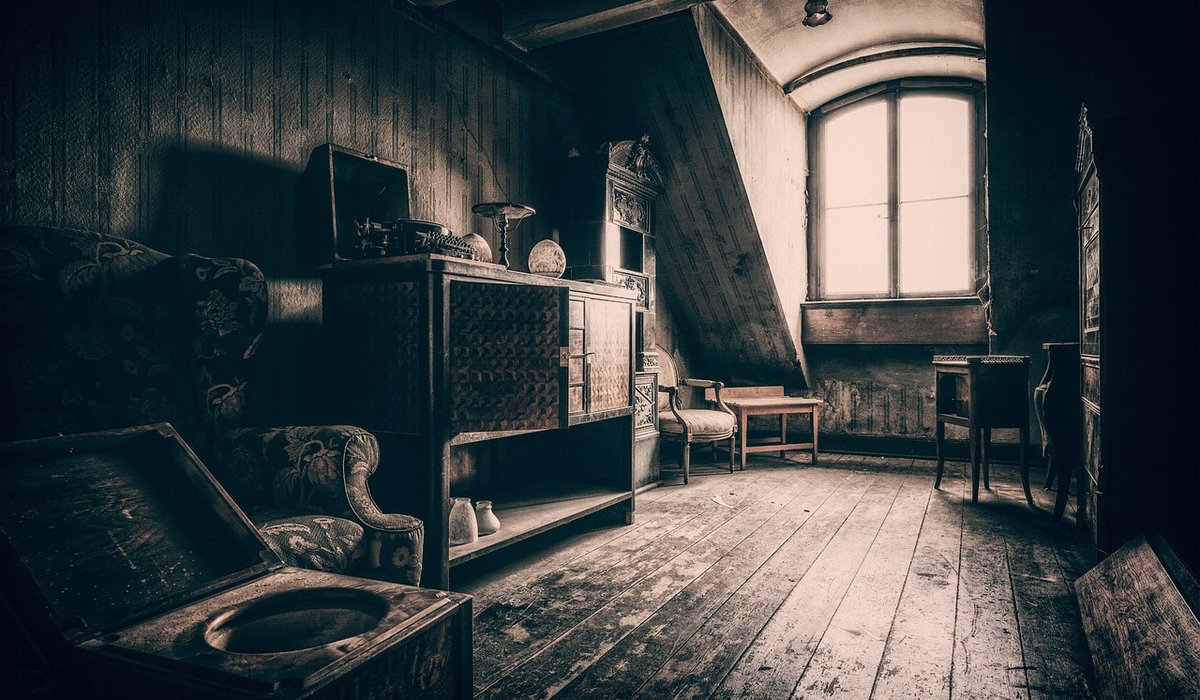
Attics have a reputation problem. Even in a well-built loft conversion, a north-facing aspect, rooflights set low into the slope and a ceiling that drops to knee height can make a perfectly generous room feel like a cave. The good news is that most of that gloom is not about a shortage of windows. It is about how the light you already have behaves once it arrives.
Rooflights throw light in a narrow band across the floor. Sloped ceilings swallow it. Dark surfaces absorb it. Fix those three things and a loft can feel as bright and welcoming as any room downstairs, whatever direction it faces.
Why North-Facing Lofts Feel Darker Than They Are
North light is soft, cool and consistent, which is wonderful for a bedroom or a studio, but it carries far less intensity than direct sun. In a loft, that gentle light has to travel further and bounce less, because the walls angle away from it.
The practical answer is to increase the amount of light bouncing around the room rather than trying to add more windows. Three levers do most of the work:
- Surface colour – choose finishes with a high light reflectance value (LRV)
- Light layering – replace a single ceiling light with several overlapping sources
- Reflection – introduce mirrors, glass and satin finishes that send light back into the room
Work on all three and you will not just brighten the space. You will make it feel taller.
Choosing the Right Whites for Walls and Ceilings
The instinct is to reach for pure brilliant white. On a north-facing wall, that is often a mistake. Pure white has a cool, grey undertone that reads as dingy when there is no warm light hitting it.
Look instead for whites with an LRV of 85 or above and a faint warm undertone – something with a whisper of yellow, pink or cream. On a north-facing wall these still read as white, but they hold their brightness. Save the cooler whites for south-facing rooms where sunlight will warm them naturally.
For ceilings, choose the same white or a shade lighter than the walls. If your ceiling sits at 2.2 metres, keeping it tonally close to the walls stops it pressing down on you. A stark white ceiling against a coloured wall draws a hard line at the top of the room, and your eye reads that line as a limit.
Finish matters too. A matt emulsion on a sloped ceiling will diffuse light softly. A low-sheen or eggshell finish reflects slightly more and is easier to wipe, which is worth considering in a loft where roof windows and vents can attract condensation and dust.
Making Sloped Ceilings Work With You
Slopes are not the enemy. Treating them as separate from the rest of the room is.
Paint the slope and the wall below it in the same colour. Paint any flat ceiling section in that same tone too. Blurring those junctions makes the room read as one continuous volume rather than a small box with awkward angles. Where a dormer has a flat ceiling and a slope meeting it, a single colour removes the visual corner.
Use contrast instead on the things you want to celebrate. Window reveals, trims and skirting in a clean bright white will frame the daylight and make the opening feel larger. Keep the dark, recessive spaces – under-eaves cupboards, storage voids, the backs of alcoves – painted bright white inside so they do not read as black holes. It sounds trivial. It makes a remarkable difference.
Layering Your Lighting in Three Tiers
A single pendant in the middle of a loft ceiling is the fastest route to a gloomy room. It creates one pool of light directly below and leaves the corners, the slope and the eaves in shadow.
Build your scheme in layers instead:
- Ambient – a dimmable ceiling fixture or two, spread along the length of the room rather than clustered in the centre
- Uplighting – wall-mounted uplighters aimed at the ceiling wash the slope with light and make the room feel taller
- Task – reading lights beside the bed, an angled lamp over a desk, slim LED strip beneath a shelf or inside a wardrobe
Choose warm bulbs in the 2700K to 3000K range. Cool white at 4000K and above may look bright in a showroom but will feel clinical in a low attic bedroom and will make those north-facing walls look grey. Dimming is essential: being able to drop the ambient light in the evening while keeping a couple of warm lamps lit is what turns a loft from functional to inviting.
Put your ambient and task circuits on separate switches, or use smart bulbs, so you are never forced into all-on or all-off.
Mirrors, Metallics and Other Light Magnets
Where you place a mirror matters more than how big it is. Hang it on a wall at right angles to the window, not opposite it. Facing the window directly, it simply reflects whatever is outside and can produce glare. At ninety degrees, it catches the daylight travelling across the room and bounces it into the darker half.
Look for other reflective surfaces that earn their place. A glass-topped table, a brushed metal lamp base, a satin-finish wardrobe door, a chrome curtain pole, a tray of pale ceramics on a shelf. Each one catches a glint and spreads it. Keep the balance though. A room that is entirely glossy feels cold, so pair reflections with textured, matt finishes – a wool rug, a linen headboard, a chunky throw – to soften the whole.
Flooring, Fabrics and the Finishing Touches
Pale floors keep the light moving upward. Light oak, a soft oatmeal carpet or a pale grey laminate will all lift an attic far more than a dark wood or deep-toned tile. Avoid an entirely white floor, which shows every mark and can feel clinical.
For windows, skip heavy curtains that eat into the room and block the edges of the glass. Roman blinds fitted snugly into the recess, or a simple voile on a slim pole, will let you control light without shrinking the opening.
Finally, reduce clutter along the low walls. Open shelving with a few carefully chosen objects will always feel lighter than a run of solid, dark furniture. The goal is a room where light has somewhere to go – up the walls, across the ceiling and back into the middle of the space. Do that and even the darkest north-facing attic will feel open, calm and full of air.

4 Comments